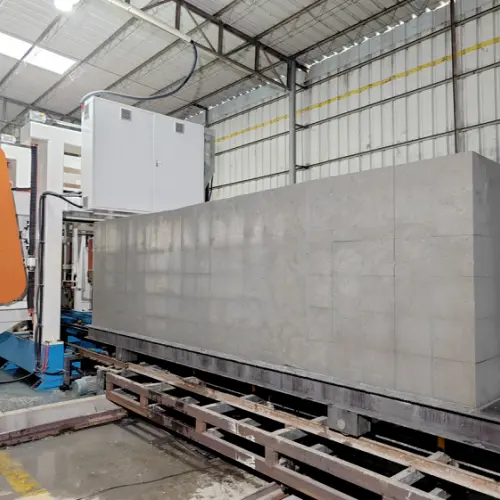
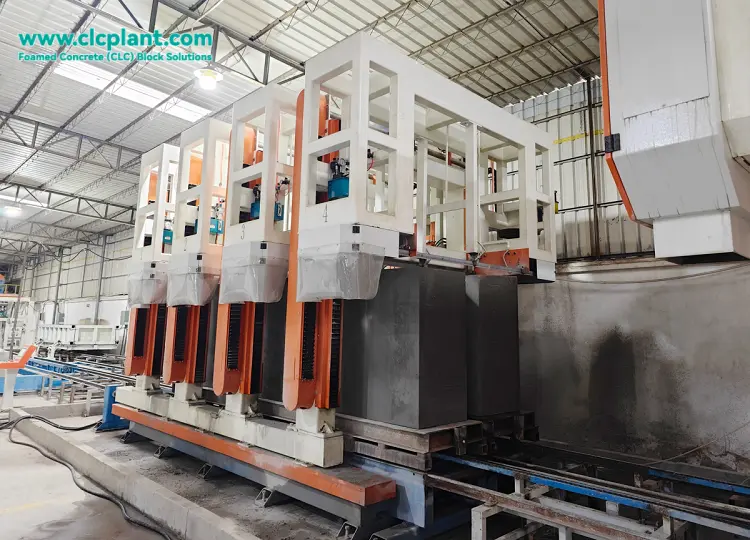
CLC Block Making Equipment
German Technology Leads the New Revolution of Green Building Materials
In the global pursuit of high energy efficiency and green environmental protection, the demand for innovative wall materials in the construction industry is surging. Our company introduces advanced German Cellular Lightweight Concrete (CLC) technology to launch a new generation of CLC block making equipment. This fully automated foam concrete block production line redefines lightweight building material standards with its non-autoclaved eco-friendly process, numerical control automation, and exceptional final product performance.
What is a CLC Aerated Brick?
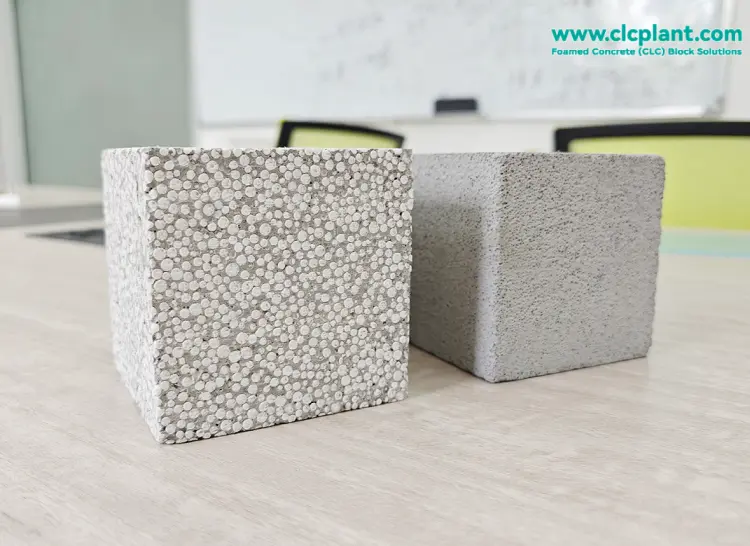
The CLC aerated brick (also known as lightweight brick, foam concrete block, or cellular concrete block) is an internationally recognized, energy-saving green building material. Manufactured through a unique process, it utilizes industrial waste such as fly ash, slag, and construction debris, achieving true resource recycling. These blocks offer remarkable advantages including superior thermal insulation, waterproof characteristics, excellent acoustic absorption, fire retardancy, and ease of construction.
Technical Certification & Qualifications
Our company holds multiple national patents and actively participates in the preparation of industry standards. Our products have passed rigorous building energy-saving product certifications, ensuring the absolute reliability and advancement of our technology and your end products.
Process Comparison: Traditional AAC vs. German CLC Technology
| Comparison Metric |
Traditional Autoclaved Aerated Concrete (AAC) |
German CLC Block Process (Our Equipment) |
| Plant Construction Period |
More than 1 year (complex equipment & boilers) |
1 - 2 months (rapid setup) |
| Investment Return Period (ROI) |
3 - 5 years |
3 - 6 months |
| Capital Investment |
Extremely high (Millions required) |
Only 10% - 20% of an AAC plant cost |
| Environmental Impact |
High pollution (boiler emissions, coal usage) |
Zero pollution (No waste water, no toxic exhaust) |
| Energy Costs |
High (Autoclaves, high-power ball mills) |
Low (Room temperature or low-heat curing) |
| Process Method |
Aluminum powder, physical foaming (open-cell) |
Advanced chemical foaming (closed-cell structure) |
| Product Quality |
Compressive strength 3.5-10 MPa (absorbs water, cracks) |
Equivalent strength, but highly waterproof with no cracking |
World-Leading German Technology: 6 Core Advantages
Our non-autoclaved aerated brick machine adopts the German Luca CLC foamed concrete technology and the British CDS steam curing system, combined with an inorganic nano-concrete process. This greatly improves the product's compressive strength, waterproofing, and thermal preservation. Making it the ultimate AAC block machine alternative.
- Fully Automatic Production Line: Features numerical control operation, automatic measuring, feeding, pouring, and mixing. It reduces labor intensity significantly, allowing operation with a minimal workforce while saving time and labor costs.
- Waterproof Block Technology: Utilizing imported German formulas, our blocks completely resolve common issues found in traditional AAC bricks, such as hollowing, spalling, and water seepage.
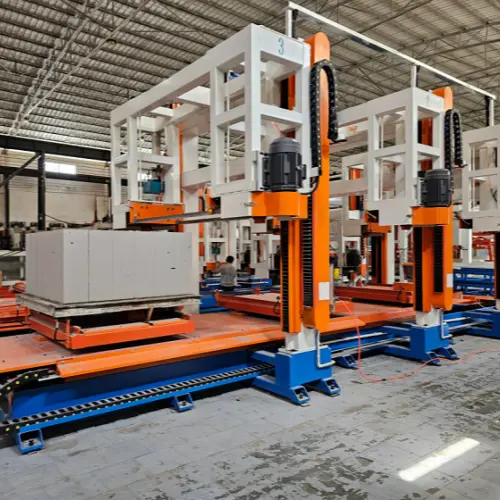
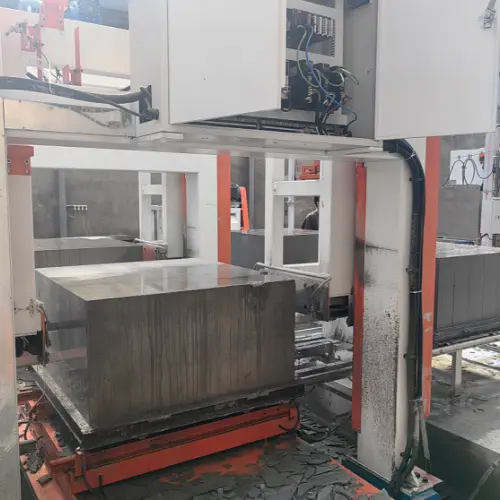
- High-Precision & High-Speed Cutting: Equipped with a newly developed mold opening machine and cutting saw. Ensures standard dimensions, zero breakage, and no dust accumulation. Adaptable to various mold boxes with an extremely low waste rate.
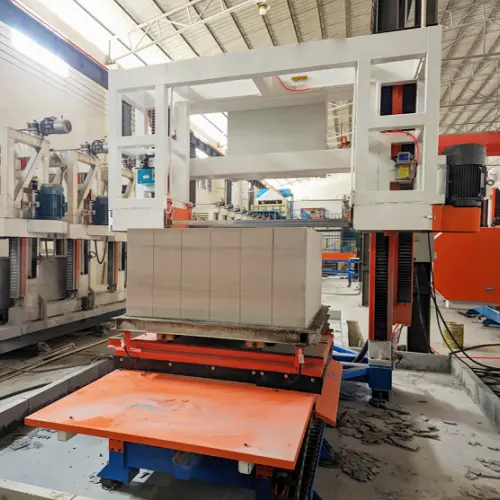
- New Palletizing and Packing Line: Offers fully-automatic pallet-free packaging. It operates stably and efficiently, eliminating product sticking issues and reducing mold bottom costs.
- Self-Heating Cycle Maintenance: A true non-autoclaved production method featuring low energy consumption. It is environmentally friendly and can be paired with new air-energy conservation systems.
- Flexible Raw Materials & Low Cost: Can utilize local materials such as sand, fly ash, slag, stone powder, phosphogypsum, and construction waste, drastically reducing production costs.
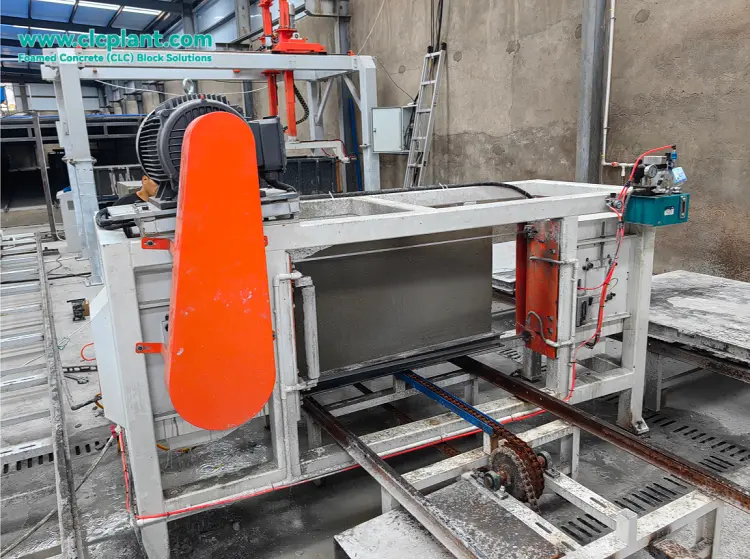
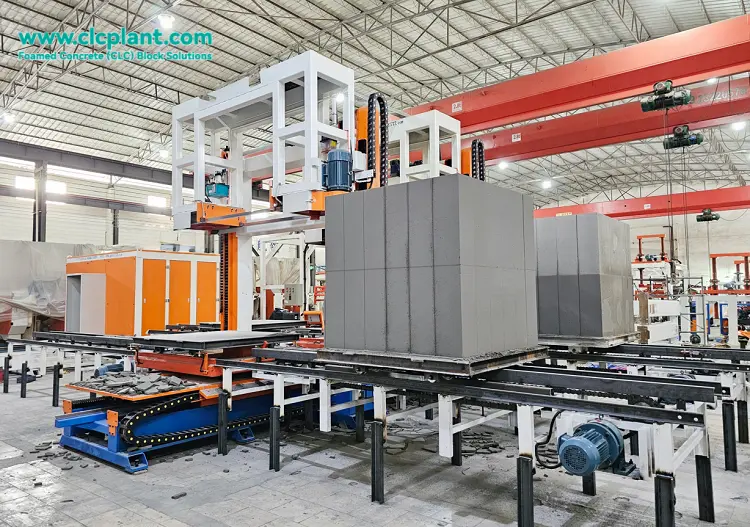
The CLC Plant Production Process
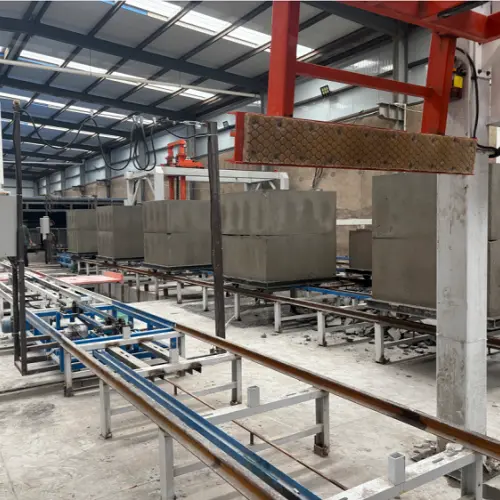
Loading Platform → Mixing & Casting → Mold Formation → Discharging → Static Curing → Demolding → Precision Cutting → Steam Maintenance → Palletizing → Packaging → Dispatch to Factory
The entire production workflow is managed by a fully automatic numerical control system, realizing efficient, precise, and continuous production while ensuring perfectly consistent product quality.
5 Outstanding Performances of CLC Blocks
- 1. Excellent Thermal Insulation: CLC blocks have a remarkably low thermal conductivity. The insulation effect is 6 times that of clay bricks and 12 times that of ordinary concrete. A standard 200mm CLC block wall meets strict energy-saving requirements without auxiliary insulation materials, cutting HVAC costs drastically.
- 2. Superior Waterproofing & Seepage Resistance: Crafted from water-hardened and air-hardened materials with a closed micro-bubble structure. They exhibit an extremely low water absorption rate. Outer walls only require a single coat of cement mortar for perfect waterproofing.
- 3. Acoustic Insulation & Absorption: Offering sound insulation ranging from 30 to 50 decibels. The unique structure provides a dual effect of sound blocking and absorption, making it ideal for residential buildings, hotels, and schools.
- 4. Fireproof & Flame Retardant: As an inorganic, non-combustible material, CLC blocks possess exceptional fire resistance. A 10cm thick wall can withstand fire for over 4 hours, making it perfect for firewall construction.
- 5. Highly Convenient Construction: Large in size but lightweight, these blocks can be easily sawed, planed, glued, and nailed. High-precision blocks allow for plaster-free, dry construction methods, matching the speed of steel structure construction.
Project Setup & Construction Requirements
We provide comprehensive, free plant construction planning and design. Investors are welcome to bring their site drawings when visiting our factory.
1. Plant Layout & Utilities Requirements
- Production Plant Area: 20-60 meters wide, 80-200 meters long, and 6 meters high.
- Product Maintenance Area: Approx. 2,000 - 8,000 square meters (flexibly adjustable based on capacity).
- Water Consumption: 80 - 500 tons per day.
- Electricity Consumption: 200 - 800 kW (Total power capacity).
- Total Factory Area: 8 - 30 acres (flexibly adjustable based on target sales volume).
2. Production Raw Material Requirements
- Cement: 425R silicate cement (Mandatory).
- Fly Ash: Optional / Selected.
- Stone Fine Powder / Slag Powder: Optional.
- Sand: Mud content ≤ 2% (Optional).
- Chemical Additives: Special formula provided directly by our company.
Successful Turnkey Application Cases
Case 1: Eco-Building Materials Enterprise (Shandong)
Originally utilizing a traditional AAC line, this enterprise faced high energy costs and product hollowing issues. After introducing our fully automatic CLC block plant in 2022, they achieved a 60% reduction in equipment investment and a 50% drop in energy consumption. Compressive strength increased by 20%, labor was reduced by 40%, and they now sustainably produce 300m³ daily using local fly ash and slag.
Case 2: New Wall Materials Co. (Jiangsu)
Specializing in lightweight foam bricks, they adopted our waterproof block technology in 2023. They successfully filled a local market gap for waterproof ceramic blocks used in wet environments (basements, restrooms), resulting in a 15% unit price increase and a massive boost in market share.
Case 3: Industrial Solid Waste Utilization Project (Henan)
This project turns power plant fly ash and steel mill slag into profit. By establishing a CLC plant with a 200,000 cubic meter annual capacity, they consume 80,000 tons of industrial solid waste yearly. This green development project earns substantial national tax incentives and environmental protection subsidies.
Turnkey Plant Construction Support & After-Sales Service
We pride ourselves on providing One-Stop Project Solutions, ensuring your investment runs seamlessly from day one:
- Plant Planning & Design: Standardized 3D drawing designs and rational factory layout optimization.
- Installation & Training: Global equipment installation, rapid commissioning, and comprehensive technical staff training.
- Parts Supply: Continuous supply of wearing parts, mechanical components, and proprietary chemical consumables.
- Localized Service: Timely on-site troubleshooting and rapid part dispatch.
- Lifetime Technology Upgrades: Access to updated chemical formulas and future equipment automation upgrades.
Frequently Asked Questions (FAQ)
1. What is the main difference between an AAC plant and a CLC block plant?
The key difference is the curing process and capital investment. AAC requires expensive autoclaves (high-pressure steam boilers) and aluminum powder, leading to massive setup costs and energy consumption. Our CLC (Cellular Lightweight Concrete) plants use a chemical foaming agent and natural/low-heat curing, reducing your initial investment by up to 80% while delivering highly waterproof blocks.
2. Can I use construction waste or fly ash to make CLC blocks?
Yes. Our block making equipment is highly adaptable. You can utilize high percentages of industrial byproducts such as fly ash, slag powder, and crushed construction waste, allowing you to lower material costs and qualify for environmental government subsidies.
3. Is the foam concrete block production line fully automated?
Absolutely. The entire system—from raw material batching and mixing to pouring, CNC cutting, and final palletizing—is controlled via an advanced PLC numerical control system, drastically reducing the need for manual labor.
Our CLC Block Making Equipment is not just an energy-efficient production line; it is a highly sustainable, high-ROI green building materials business solution. We have successfully empowered dozens of global enterprises.
You are warmly welcome to visit our factory with your plant drawings. Contact us today to receive a FREE project report, process layout, and customized equipment quotation!